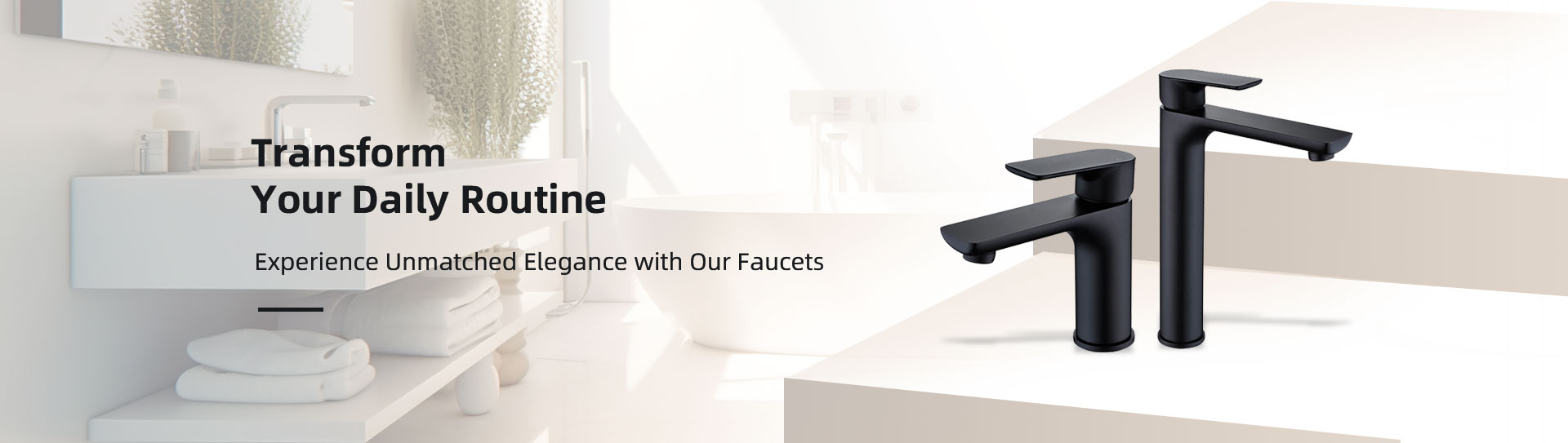
Australia is one of the most compliance-driven tapware markets in the world. For products entering this market, certification is not a sales extra. It is part of market access. In practical terms, most tapware used in plumbing installations must meet WaterMark requirements under the National Construction Code, and many taps also fall under the WELS scheme for water efficiency labelling and registration. For suppliers targeting Australia, understanding these two systems is the starting point for product planning, testing, packaging, and listing preparation.
For Australian buyers, the key point is that compliance is not just about passing one test. It is about matching the exact product type to the correct scheme, the correct standard, and the correct documentation. A kitchen mixer, basin mixer, or laundry tap may need both WaterMark certification and a WELS registration. A tap that sits outside WELS scope may still need WaterMark approval if it is covered by the WaterMark Schedule of Products.
WaterMark certified tapware is the main requirement for products that will be installed in Australian plumbing systems. The Australian Building Codes Board states that any plumbing product type listed on the WaterMark Schedule of Products must be WaterMark certified before installation in Australia, and it must be installed by a licensed plumbing practitioner. WaterMark exists to confirm that the product is fit for purpose and authorised for use in plumbing and drainage installations.
For tapware, the relevant specification is commonly AS/NZS 3718. This specification covers metallic taps, plastic taps, mixing taps, sensor taps, lever taps, timed flow taps, and tapsets from DN6 to DN50, generally for continuous operating temperatures up to 80 degrees Celsius. That is why Australian plumbing standards are closely tied to material quality, cartridge performance, pressure handling, endurance, and dimensional consistency rather than surface appearance alone.
Another compliance point is now becoming more important. The NCC transition to lead free plumbing products continues through 2026. The WaterMark program states that from 1 May 2026, only impacted products marked with the Lead Free WaterMark will be authorised for use. Under PCA 2022, lead free means a weighted average lead content of no more than 0.25 percent for products in contact with drinking water. For companies supplying kitchen and Basin Taps into Australia, this date is now commercially significant.
wels rating tapware matters because registration and labelling are mandatory for regulated products supplied or offered for supply in Australia. The WELS scheme covers taps used over a fixed basin, sink, or laundry tub. It excludes some categories such as bidet taps, taps used exclusively over a bath or spa, taps that are part of an appliance, and thermostatic taps. This means tapware certification requirements Australia are product-specific, not one-size-fits-all.
The WELS label tells the market how water efficient the product is. According to the official water rating guidance, the label shows the star rating, the flow rate, and the registration details. In 2025, the scheme was estimated to have saved 2060 gigalitres of water and 16.7 billion dollars in water and energy bills since its start in 2006. That is one reason WELS approved Kitchen Taps are not only a compliance issue, but also a selling point in a market that values measurable efficiency.
The commercial value of higher efficiency is easy to understand. Official Water Rating guidance states that replacing an older 15 litre per minute tap with a 3 star tap at 9 litres per minute can save 11 kilolitres and 33 dollars per year, while a 6 star tap at 4 litres per minute can save 20 kilolitres and 60 dollars per year. In a residential rollout, apartment project, or hospitality program, those differences become meaningful very quickly.
In most cases, an Australian buyer evaluating tapware for basin, kitchen, or laundry use should check five things early in the sourcing process.
| Item to confirm | Why it matters in Australia |
|---|---|
| WaterMark certificate status | Confirms the product type is authorised for plumbing installation |
| Applicable product standard | Tapware is commonly certified against AS/NZS 3718 |
| WELS registration status | Required for regulated taps supplied in Australia |
| WELS label data | Shows star rating, flow rate, licence number, and registration number |
| Lead free readiness | Critical for drinking water products as the 1 May 2026 transition date arrives |
These checks reduce risk at customs, during specification review, and at installation stage. They also help avoid a common problem in the plumbing fixtures industry, where a factory may have a general compliance claim but not a matching certificate for the exact model being sold.
Certification is only useful when the documentation matches the exact product. In Australia, mismatches between model code, flow controller, finish variation, or packaging label can create avoidable delays. The WELS regulator has also clarified that taps supplied with different interchangeable flow controllers may require separate registrations for each flow controller option, with clear instructions and correct advertising information. That is a strong reminder that compliance management must be handled with discipline from product development through final shipment.
This is where manufacturers with process control have a clear advantage. LODECE states that it operates under ISO9001, holds Australia WaterMark certification, and offers OEM and ODM support for different markets. Its own Australia-focused tap listings also show model-level compliance examples, including WaterMark certification and WELS 5 Star 6L per minute performance on selected products. For buyers serving the Australian market, that combination supports smoother product selection, clearer paperwork, and better alignment between technical compliance and commercial presentation.
Many sourcing issues start when certification is checked too late. A buyer may confirm style, finish, and price first, then discover that the selected tap is not registered under WELS, is outside the right certification scope, or is not yet aligned with lead free requirements. In Australia, this can affect listing approval, plumbing acceptance, and delivery schedules. The better route is to confirm WaterMark certified tapware status, WELS label information, and lead free readiness at the quotation stage rather than after production has started.
That approach also fits broader market conditions. The Australian Bureau of Statistics reported average household water use at 174 kilolitres per household in 2023 to 2024, up from 168 kilolitres the year before, while the long-term trend since 2015 to 2016 still shows an 8.5 percent decline due to efficiency improvements and conservation habits. In that kind of market, WELS rating tapware remains highly relevant because water performance is tied to both regulation and buyer expectations.
For most tapware sold into Australia, the compliance path is clear. WaterMark handles product authorisation for plumbing use. WELS handles water efficiency registration and labelling for regulated taps. AS/NZS 3718 remains the key tapware product specification behind many WaterMark approvals. Lead free transition requirements are also now an urgent checkpoint for products in contact with drinking water ahead of 1 May 2026.
For suppliers aiming at the Australian market, strong compliance work is not separate from good manufacturing. It is part of product design, testing, model control, and document accuracy. LODECE’s positioning around ISO9001 management, Australia WaterMark capability, and model-based compliance support gives buyers a more practical foundation when selecting tapware for this market. In a category where approval, efficiency, and reliability all influence the final decision, that preparation makes a real difference.