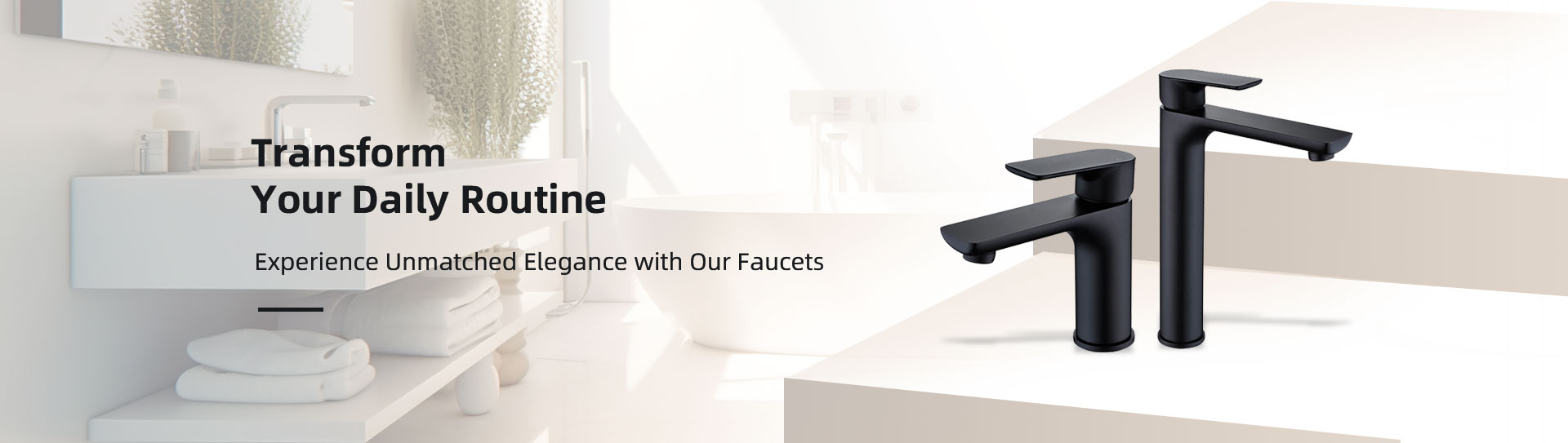
Selecting hotel bathroom tapware is not only about matching a room concept. In hospitality projects, tapware affects daily guest experience, cleaning efficiency, water performance, replacement planning, and long-term operating cost. A hotel may purchase hundreds of sets at one time, so even a small weakness in finish quality, cartridge life, or spare-part consistency can turn into repeated maintenance work across the property. That is why tapware for hotel bathroom projects should be evaluated as a full-life-cycle decision rather than a simple product purchase.
Hotel bathrooms face much heavier use than residential spaces. Guest turnover, frequent housekeeping, variable water pressure, and repeated hot and cold operation all place stress on cartridges, handles, finishes, and sealing points. Industry test procedures referenced by the United States Department of Energy rely on the plumbing supply fittings standard ASME A112.18.1 and CSA B125.1 for faucet performance verification, which is why serious project buyers should always ask how a supplier tests flow, leakage resistance, pressure performance, and life-cycle durability before shipment.
A durable faucet body also begins with the right material route. For hospitality use, consistent brass quality, stable machining precision, good polishing control, and reliable plating or coating execution are more important than decorative claims. For potable water applications, lead content compliance matters as well. The United States Environmental Protection Agency states that lead-free plumbing fittings and fixtures must not exceed a weighted average of 0.25 percent lead across wetted surfaces. For projects that target regulated markets, developers should confirm this material compliance early instead of leaving it until final documentation review.
A lower purchase price does not always produce a lower project cost. In hotels, maintenance labor, room downtime, spare part logistics, and finish inconsistency during replacement often cost more than the original faucet itself. When one bathroom mixer starts dripping, the real cost is not only the cartridge. It can also involve housekeeping reporting, engineering inspection, guest dissatisfaction, and temporary room service disruption. Hospitality plumbing guidance consistently highlights preventive maintenance, scheduled inspection, and record keeping because fixture failure can affect broader operational efficiency.
This is where a reliable commercial tapware supplier brings measurable value. Developers should ask whether spare cartridges and aerators are standardized across product families, whether replacement parts remain available after project completion, and whether finish batches can be matched later. A supplier that offers long-term model continuity can help reduce fragmented inventory and simplify maintenance training for engineering teams. In large hotel developments, that consistency becomes a practical cost-control tool rather than just a procurement preference.
Water efficiency is now a technical and commercial issue. In many markets, project approval and specification review increasingly pay attention to flow performance. The United States Environmental Protection Agency states that WaterSense labeled bathroom sink faucets use a maximum of 1.5 gallons per minute and can reduce water flow by 30 percent or more compared with the federal standard of 2.2 gallons per minute. In Australia, the government water rating system shows water use in litres per minute, and some housing guidance sets 9 litres per minute as a benchmark for internal cold water taps and single mixer taps. These figures matter because poorly selected taps can increase utility costs without improving the guest experience.
For hospitality bathroom taps, the goal is balance. Flow that is too low can create handwashing frustration. Flow that is too high can waste water and cause splashing around vanity surfaces. Developers should therefore review actual rated flow data, pressure conditions, aerator configuration, and local compliance requirements before selecting a model. A good commercial mixer tap supplier should be able to provide test values clearly and align models with the target market instead of offering one generic version for every project.
Hotels usually develop design language room by room, floor by floor, and often across multiple phases. Tapware must therefore do more than look good in one sample bathroom. The shape, finish, proportion, and mounting style should stay consistent across basin mixers, shower controls, bath fillers, and accessory coordination. If a supplier frequently changes details, discontinues handles, or cannot control color variation between batches, the finished project can lose visual coherence.
LODECE presents a clear advantage here. The company’s website shows a focused tapware portfolio covering Basin Taps, Kitchen Taps, Concealed Mixers, shower sets, and bathroom accessories. It also states that the company provides original equipment manufacturing and original design manufacturing customization, which is useful for projects that need consistent styling across multiple bathroom touchpoints. This matters for hotel developers because repeatable design is often just as important as initial design.
When developers compare suppliers, product photos are not enough. Production depth strongly affects schedule control and quality repeatability. LODECE states that it was founded in 1991 in Shuikou, Kaiping, has an 8000 square meter factory, more than 100 workers on the homepage, and equipment including gravity casting machines, CNC machines, five-axis CNC drilling, welding, polishing, and packaging processes. The company history section also states that the factory expanded beyond 8000 square meters and has served over 28 countries. For hotel projects, this kind of manufacturing integration can help reduce communication gaps between design, machining, finishing, assembly, and inspection.
Developers should also ask whether the supplier can maintain the same surface finish, cartridge specification, and assembly tolerance across repeat orders. Project schedules often extend over months. A factory with in-house process control is usually better positioned to keep product consistency from pilot approval to full shipment. That is especially important when rooms are handed over in stages and matching replacement stock may be needed later.
Documentation should never be left until the end of procurement. LODECE states that it holds ISO 9001 and Australia WaterMark certification. ISO 9001 supports process consistency, while WaterMark is relevant for product acceptance in the Australian plumbing market. Developers working on hospitality projects should check not only whether certificates exist, but also whether they match the exact models and destination market requirements.
The same principle applies to water safety and plumbing standards. Testing and certification bodies such as NSF reference ASME A112.18.1 and CSA B125.1 for plumbing supply fittings. That means project teams should review certification scope, test basis, and technical files before finalizing specifications. A visually attractive faucet that lacks the right paperwork can delay approval, substitution review, or installation.
Here is a simplified framework developers can use when comparing suppliers for tapware for hotel bathroom projects:
| Evaluation area | What to confirm | Why it matters |
|---|---|---|
| Body material | Brass grade, lead compliance, corrosion resistance | Supports service life and potable water compliance |
| Durability testing | Pressure, leakage, life-cycle test records | Reduces risk of early in-room failures |
| Water performance | Rated flow, aerator setup, market compliance | Balances comfort and operating cost |
| Design consistency | Matching families across basin, shower, bath, accessories | Keeps hotel bathroom design unified |
| Spare parts | Cartridge, aerator, handle availability | Cuts downtime and simplifies maintenance |
| Production capacity | In-house casting, CNC, polishing, assembly | Supports schedule stability and repeat orders |
| Certifications | ISO 9001, market-specific approvals | Helps project review and market entry |
The value of this checklist is that it moves the conversation away from unit price alone. In hospitality, the better question is how well the chosen tapware will perform after thousands of daily interactions, repeated cleaning cycles, and years of maintenance handling.
For developers seeking a long-term commercial tapware supplier, LODECE shows several strengths that align well with hotel requirements. The company highlights more than three decades of manufacturing experience, a dedicated tapware product range, in-house processing equipment, original equipment manufacturing and original design manufacturing capability, ISO 9001 management, and Australia WaterMark certification. These points suggest a factory structure that supports durability control, finish consistency, project adaptation, and export-oriented documentation.
In practice, hotel procurement works best when the supplier can combine design continuity with dependable technical execution. That means stable product families, repeatable manufacturing, clear test data, and the ability to support the project after installation. When those elements are in place, hotel bathroom tapware becomes more than a decorative choice. It becomes part of a smarter hospitality asset strategy that protects guest experience and lowers long-term operating pressure.